Showing posts with label Book Review. Show all posts

July 19, 2012

Medieval English Monarchy

The Lady of the Rivers
Philippa Gregory
Narrated by Bianca Amato
Historical Fiction
To buy Amazon - Barnes & Noble


I checked this audio-book out from the library thinking that I probably would not even end up listening to it. Usually I tend to lean more towards shorter books, and this one was 15 discs, and it sounded like an old medieval/fantasy story, something I normally wouldn't read. I'm not sure what compelled me to check it out ultimately. And it was sheer laziness that led me to renew it twice (that's six weeks for my library district), before ever popping a disc into my computer at work to give a listen. I'm grateful now that I did.

The book captivated me from the beginning. A young noble girl from France crosses paths with Joan of Arc before she is tried and burned at the stake for heresy. This girl possess 'gifts' from being of the line of a water goddess, Melucina (Mel-You-See-Nah. The worst part about reviewing audio-books is not being able to spell the odd words/names. I try!), and realizes very early, from her exposure to Joan, that powerful women are not welcome in the world of men. The girl, Jacquetta, is married off to a Duke of England who is occupying France, the Duke of Bedford. He is an old man, whose wife had died, and marries Jacquetta because he has heard of her gifts, not for love. He is a man who has hired herbalists, scholars, and alchemist on his quest for the Philosopher's Stone, and thinks marrying a young virgin with gifts of foresight will be the key to his quest. War takes up most of the Duke's time, and Jacquetta is left mostly in the care of his most trusted squire, Richard Woodville (real name Richard Wydeville), with whom she eventually falls in love with and marries (after her old man of a husband dies, of course). Easily the most enjoyable part of the story - Jacquetta and Richard had fourteen children together, they obviously loved each other very much! Because Richard is so far below her station, they have to marry in secret before notifying the English court, because the noble men were planning another arranged marriage for Jaquetta. In those times people were always married in order to ensure allies or strengthen bonds between families/countries, which is why Jacquetta married the Duke in the first place. At this point the young King of England, Henry VI, is arranged to marry Jacquetta's cousin from France, Margaret of Anjou, and Jacquetta is called to court to be her lady in waiting. This is where the story really starts.

The most fascinating part of this story, to me, is that every character in this book is based off of real history, real lords and ladies of 1400s England (here is the wiki page, we're looking at Henry VI in the 1400s). It is highly fictionalized, for in fact, there is no way to know exactly what happened so far back, especially because so much was hidden from the common knowledge of the people, but Philippa Gregory does a fantastic job weaving the characters in and out of each other's stories, and filling in the gaps. I even looked up these old English monarch's on Wikipedia, just to see how much of the story were actual events. Turns out, all the major plot points are absolutely in the historical record. All of Jacquetta's and Richard's fourteen children, the territories won and lost, and even the rumor that Queen Margaret's only son was not born of the King, but of a Duke, and advisor to the King.

The narrating was excellent. Amato did a wonderful job of changing the pitch and tambre of her voice for each character, none of which were too garishly overdone. I consider it a good thing when I sit here at my keyboard unable to think of anything that really stood out about the narration; Amato allowed the story to be the story, which is the best thing a narrator can accomplish. There were very few instances of foreign words in the text, but where they were they were perfectly done. The only thing at all I can think is that the entire book was done in an English accent, where the main character, Jacquetta, and the Queen, who plays a huge role in the book, were both French. But honestly, that is only a technicality.

For some reason, this book captivated me more than most. I was sucked wholeheartedly into this story, and these characters, and this bit of history (no matter how embellished). I think I especially liked it because the history is so old, and so generally unknown (by me anyway, I know nothing about medieval monarchy). Frankly, I cannot wait to read another of Philippa Gregory's books, I'm just uncertain which to turn to next. That reminds me! This book is actually part of a series called The Cousin's War, and The Lady of the Rivers is book three in that series. I'm almost scared to go back and read The Red Queen and The White Queen, the first two books of the series, because from what I understand, they both deal with events after where The Lady of the Rivers leaves off, and also, I'm afraid I won't be able to stay quite as interested if I am reading words like "Duke of Bedford", "Dower to Duchess", and "Edmund, Duke of Sommerset" over and over again all over the pages. I think having this book read to me was half of the magic. At folks, it was magic.

Happy Reading Everyone!

July 17, 2012

Generational Seacoast Life

Galore
Michael Crummey
Folklore Fiction
To Buy Amazon


I’m not sure what drew me to this book. It doesn’t have an intricate or telling cover, and the title doesn’t give much insight to what it names. For some reason, I saw it on display halfway across the library, and checked it out without a single thought. This book and I were meant to be (don’t you guys sometimes feel that way?).

Galore is a wide-spanning all-encompassing book, and it's hard to summarize in just a few sentences, so I've gone the other route, hardly explaining at all! When people asked me what my book was about when they caught me reading it, I’d generally say “a small coastal town in Canada," which is true, but doesn't do it much justice.

First and most of all, I’d like to talk about the writing. There are books that may span a summer, or a winter – a simple season of character development and transformation. Some entire books use 500 pages to describe a series of events that happened in only a few days, or even moments. Galore is a 300 page book that spans six generations in two parts. Michael Crummey grew up in the Newfoundland/Labrador area of Canada (the Atlantic coast), which is the setting for this book. He obviously knows the area, the lifestyle, and the folklore of his home, and it shines through in the story. Stylistically, he used sparse and stark language, and in places one sentence can progress the story through an entire season. There were details, but not every detail. Everything was tastefully done.

To me, writing a story of this magnitude would be just overwhelmingly complex. How do you describe everyone in a community, their relationships with everyone else in the communiy, the progression of the town through time, keep the reader interested, and still lead up to a conclusion that includes none of the characters you just spent the first half of the book detailing?? Ladies and Gentlemen, I’m afraid you will have to find this book yourself to answer that question, because I promise you it works out to a beautiful conclusion that adheres the two halves of the story together.

I love the way things are revealed about the characters, but still there is always a mystery behind each person. That quality almost makes you feel, as a reader, that you are a member of this community - where certain things are made public, and some things stay behind doors closed tight. I also loved that it’s the story as much about the people as the town growing within it. From the earliest beginnings in the story, we hear of the first settlers of Paradise Deep, King-Me Sellers and Devine’s Widow, how their families expand, and how the communities transform from a few shanties on the coast to having a school house, a church, a hospital, etc. 


I realize this doesn't tell you much about the story, I know, and I apologize. The thing is, the book is mostly details and relationship ties that are hard to explain without fear of accidentally starting my own novel right here in this post! Basically the catalyst of this story is this - a whale is found beached after a hard season of fishing, so everyone is convinced this beached whale is a miracle that has saved their lives through the winter. As they are tearing through the animal (after letting it die of it's own accord), a man crawls out, stark naked, unable to speak, reeking of fish, and white as a ghost. 

In short, I greatly enjoyed reading this book. I have a book that may be a little similar on my shelf, We, The Drowned, also a multi-generational sea adventure book (any of you read it??), and I'm very excited, and somehow nervous, to read it. I hope a few of you will go out and find Galore,  or I hope, at least, that the next time each of you goes to a library or a book store, a book reaches out and grabs you as Galore did to me. It's worth listening to those instincts (usually)!

Happy Reading Everyone!

July 12, 2012

Book Vs Movie: A Steampunk Adventure


The Golden Compass

Philip Pullman
Young Adult
Fantasy Adventure
(movie information below)


The Golden Compass is part one of a young adult trilogy (The Subtle Knife and The Amber Spyglass are the titles of the other two installments). I first began my journey with this story in middle school, when my best friend, also an avid reader, suggested I read an old scruffy paperback copy of hers.


The story gripped me immediately: a young tomboy orphan girl, Lyra, who resides in a renowned college in Oxford but runs the streets as a gypsy, is longing to go on an adventure to the North, a land of ice bears and mystery. She gets a chance when a beautiful and sophisticated woman comes to visit the college, Mrs. Coulter. Coulter recruits the young girl to be her assistant, reasoning with the master of the college that a young girl simply cannot be raised by a bunch of old men. Meanwhile, children all over Lyra’s world have been disappearing unexpectedly, never to be seen again. Before Lyra departs with Mrs. Coulter, the master of Jordan College gives her a valuable relic, the Golden Compass (also referred to as an Aletheometer), with instructions never to tell anyone she has it – he also mentioned that it had belonged to Lyra’s uncle, Lord Asriel, who was absent, exploring in the North.  After a whirlwind of makeovers and shopping, Lyra’s sense of adventure rears it's head, and she decides to sneak away from Mrs. Coulter and take the Golden Compass to Lord Asriel.

In between the lines of this simple seeming adventure are heavy themes that can either be taken at face value as part of the story, or as a sort of commentary on humanity, religion, and science in our own world. The plot is riddled with interesting characters that keeps excitement up, and keeps kids interested. Things like Armored Bears, Gyptians who reside on longboats, Witches who age very slowly and do not feel the cold (well, they feel it, but can ignore it), and a feisty aeronaut (what we would call a Hot Air Balloon man) fill the pages with endearing and sometimes freighting eccentricities. I highly recommend this series to anyone middle school level and older. I'm talking full grown men could enjoy this series, because as I said, the themes resonate throughout humanity.


A movie was made of The Golden Compass in 2007 based on the novel, directed by Chris Weitz and starring Nicole Kidman (Mrs. Coulter), Daniel Craig (Lord Asriel), and Dakota Blue Richards (who plays Lyra).


I was excited to see the movie as soon as I heard it was coming out (I think I first saw the preview in the theater when I went to see the remake of The Poseidon Adventure, called simply Poseidon), since I cherished the books so much growing up. On the part of Hollywood, I think it was a good idea to make the first installment of this adventure into a movie; not only is this book a great foundation for a larger adventure spanning the universe and many creatures, but it is well rounded enough to be able to stand alone and still make a great movie. There were many changes, and a lot cut out, but the movie, in my opinion, doesn't suffer much from it.


The biggest sort of difference I felt between the two, is the demographic they were made for. The movie felt like a kids/family movie, while I never really got that impression by the books. Obviously they were not written for adult readers, but the books didn't necessarily read as children's, or even young adult. When I first read them in middle school, it was a challenge to adjust to the type of words Pullman used. For example, he used a special character 'æ' in a word that appeared very often throughout all three books. If I decided to read them again tomorrow or even five years from now, I wouldn't feel like I was reading a children's book, but I will always feel that The Golden Compass movie is geared towards younger kids, even though (while played down) there re some scary occurrences.


I think one thing the movie sacrificed is a lot of the prominent themes that make this series (especially this first book) enjoyable for adults. The story is jam packed with commentary about the treatment of children, the over protectiveness of establishments of power over citizens, religious commentary, and the metaphysical. The movie barely scratches the surface of half of these, and doesn't convey the urgency of understanding the concepts. What does shine through from the book are the themes of loyalty, friendship, and the warning of having blind faith/trust in something/someone (I am using a lot of slashes in this review!), which are more childish. I can understand why the movie makers had to choose which themes to include, and which to enhance further...it's just simply something you have to do when adapting novel to screenplay.


One thing the movie did very well was the steampunk aspect. Gyrocopters, Zeppelins, clockwork spies...it gives you the impression of the differences between our world and Lyra's. With a movie you get a lot of chances to get more creative and literally show the audience they're in another world. I thought it was very well done, and not over the top, which could be tricky. Also I'd like to say that I LOVE the steampunk concept and I'm very excited that it's becoming bigger and more popular in today's market (though not too popular I hope, vampire romance fiction anyone??).


Of course, if you are reading this trying to decipher whether or not it will be worth your time to read the book(s), or if the movie will suffice, I beg you to do the reading. I think I like the second two books better than the first, which doesn't always happen with a trilogy. I don't think they are planning on making The Subtle Knife or The Amber Spyglass into movies, in fact, they changed the ending of the first book in the movie, and I'm not sure how they'd recover that for a sequel...but never mind that! It doesn't matter because you are all going to go read the books instead!


Winner: Book!


Until next time,
Happy Reading Everyone!

June 30, 2012

Another Religious Adventure

The Book of Names
Jill Gregory & Karen Tintori
Fiction/Thriller
To Buy Amazon - Barnes & Noble


Here's another review for Audiobook Week (an occasion I didn't know about this until I stumbled upon a twitter hashtag on Tuesday). The book is seven discs, (8 hours), and is narrated by Christopher Graybill.

It took me awhile to warm up to Graybill's reading, as it is with nearly every audiobook I listen to. Generally my first thought on track one is something like 'this guy/gal sounds so weird, how did he/she get this job?!' but about five minutes in everything is fine, and the voice simply becomes part of the story (except in one or two very bad cases). It catches my interest when an audiobook includes some kind of audio detail that you don't always hear, and in The Book of Names, it was sort of an echo microphone effect used when characters were either thinking to themselves or conversing through a telephone. It was a little odd sounding, but it was very effective within the story. The book is broken down into very small 'chapters', usually jumping points of view as the action sets up, typical thriller set up. I've seen some audio books that use multiple narrators to cover the voices, but that wasn't the case here. Graybill used variants of his vocal range and regional accents to cover the entire character spectrum. Some of the voices seemed a little exaggerated, but there was an international cast of characters, so it worked pretty well.

It is said that there are 36 souls in each generation that are capable of complete spiritual enlightenment. If any of them die prematurely, leaving less than 36 righteous souls at any time, the world becomes more chaotic. If all of them should die, the world as we know it, comes to an end. These names were recorded by Adam from the word of God, and were passed down until eventually the Book of Names was lost in time...

I liked the story - the fast pace and interesting historical questions made the time pass quickly while I listened at work. I have a love of old cultures and traditions, so many of the subjects discussed in the book intrigued me: Kabbalah, Tarot, Zodiac, biblical references, the Tree of Life, and of course, any secret societies (there is a bit of a conspiracy theorist in me)! I have little to no knowledge about Judaism, so a lot of the content was new to me, and I'm not completely certain what was fact and what was fiction, but it doesn't detract from the story.

The plot was very DaVinci Code esque:

In the DaVinci Code, Robert Langdon, a world-renowned symbologist (a person who studies symbolism throughout time and cultures), who teaches class at Harvard University, is sought out to help solve the murder of the Louvre curator. After analyzing the body and teaming up with a police cryptographer, Langdon begins an incredible journey of puzzles, history, and alternate biblical conspiracies.

In The Book of Names, David Shepard falls off a roof when he is young, and has a near death experience. Ever since that time, names fill his mind, names he's never heard, people he's never met - and he records them in a journal. We find out that these names are the same names in the fragments recovered from Adam's Book of Names. Unfortunately, a dark, evil, secret society, the Gnosios (I think, I only listed remember? The word derives from Gnostic) also finds out that David knows these names; names they have been desperately trying to recover for generations in order to destroy the world as we know it, to have it born anew.

The plots are fairly similar, but one thing really jumped at me. In DaVinci Code, Langdon is the teacher. He goes through his adventures with a knowing and calculating mind, and all the tools he needs as his adventure progresses. Shepard, on the other hand, knew nothing of any religious affiliations or even anything strange - for all he knew, the names were just a slightly strange side effect from a nearly fatal accident when he was a kid. I mean, his degree was in political science (his dad was a senator), and neither of those facts came in handy for him, except for one character he met through his father. I'm not sure which is more annoyingly convenient; having a character that 'happens' to know everything he needs to survive, or a character that depends on the people he 'happens' to meet along the way - I think the latter, because how could he have known who to trust? If he had let the wrong sort of person know about his gift, the story could have concluded with the end of the world.

As it was, David Shepard happened to hear one of the names on the news one day as he was writing it down - the woman had been murdered. Once the initial shock passed, he began searching for the other names, finding many of them also deceased. Unsure of what to do next, he asks his best friend and colleague, a professor of religion, who refers him to a Rabbi, and the adventure goes from there. Before he sees the Rabbi, however, he received a call from his step-daughter, whose mother had just remarried. The new husband adopted the daughter, changing her name to something very familiar to David...one of the names on his List...the list of people who mysteriously end up dead.


June 26, 2012

A Humorous Bite of Life

Bossypants
Tina Fey
Memoir/Humor


I am a huge fan of memoirs. I’ve read only a handful at this point, but I’ve enjoyed them all quite thoroughly (small insight into my life? I have never been able to spell ‘thoroughly’ without spell check – I know, really Emma??). I found Bossypants as an audiobook in my local library, and listened to it while diligently working, as I do.

I found Bossypants much more well-rounded than I expected. I’m not sure why I’m always surprised by the validity of books with cheesy/humorous titles, besides the same reasons other people have for the same thought. I was aware of how popular the book was, which is usually a turn off for me, but by now the hype has died down about it, and it was sitting there so politely on the library shelf on display. The rest, my bookish followers, is history.

The Bossypants audiobook is, as the best ones are, narrated by the author. The book is about 5 ½ hours on 5 discs and includes a PDF file for embarrassing/milestone photographs. One of the best things about this audiobook, that differs from other audiobooks that I’ve read so far, is that Fey recognized her readers as ‘listeners’ and changed some things to be more suited to her audience. Brilliant. She often related that there was a corresponding picture to the anecdote currently being discussed to be found in the PDF, and the original SNL skits are actually played for us to hear in the chapter about Tina’s ‘Sarah Palin days’.

I was surprised at how much I liked Tina Fey. I’d heard of her before, I knew enough about her to know she was on Saturday Night Live (which I’ve only seen skits of on youtube), and to recognize her by sight (she was in Mean Girls, for instance, but did you know she wrote the screenplay too?), but beyond that...clueless. When writing about her life, she made the awkward and light-hearted things laugh out loud funny, but kept the serious things serious, which brought the well-rounded feeling overall. She wrote a lot about growing up and becoming a woman, into her improve days, and how all that has helped her in her life today. The part I enjoyed the most were the bits about her daughter and parenthood (both the funny and serious parts), and I loved how honest she was throughout (no problem spelling that one, by the way!). The book was closed (I don’t consider this a spoiler because it is a memoir after all, and she is a celebrity) by her internal debate on whether or not to have another baby, and how at the end of the day, it was her decision, no matter how many things hung in the balance (possibly the difference between sanity and the alternative).

The only thing I wasn’t so sure about is the title. The book led up to her show, 30 Rock, of which I guess she is ‘The Boss’, but she didn’t necessarily write about being the boss. She did talk about the inner-workings of the TV show a bit, and how she is involved in the many aspects of it….I guess when I think of ‘Boss’, it’s the managing people part of it that I think of. I didn’t really get much of that from the book here, which is not necessarily a bad thing, just something I noticed. And 30 Rock is after all, only a small piece in the book that is Tina Fey’s life.

I would highly recommend this book to everyone, in every walk of life – after all, who doesn’t need a good laugh? This book was energetic and refreshing and a joy to read. I’m seriously considering purchasing (the audiobook version) for myself to keep listening to forever, but the price is not quite right for this point in my life ($20!). [This is the reason all the audiobooks I review come from the library!] My alternative is the paperback version. But if you can get your hands on the audiobook version, I’m telling you, you won’t be sorry!

Excuse me, everyone, while I go look up how much “Is Everyone Hanging Out Without Me” by Mindy Kaling is on NookBook!

June 9, 2012

These Ancient Greeks Are Just Like Us!

Lysistrata
Aristophanes
Unknown Translator


Well this is a first for me - I have never reviewed a play before on this blog, in fact, I haven't really read any plays before (save for one or two in high school). But after watching my friend Dean's video book review on it, I decided it may be worth a go. It took only an evening for me to read it on my Kindle (94 pages) and this morning I watched it in play form on youtube (which I highly recommend after reading). 

I downloaded the free version from the Kindle store, which was 'converted from its physical edition to the digital format by a community of volunteers.' (from the book description), but unfortunately I was unable to find which translation it was taken from. The version I read had a list of characters in the front of the book, but was not separated into acts and scenes as a standard play would be. I think it was especially helpful after reading this play to watch it being performed, as many of the parts were declared simply 'women', 'men', 'Spartans', 'old men', and 'Athenians'. One other critique of this version is the over the top lyrical lines. This was obviously not written in English, so even though it was poetic in Ancient Greek, I would rather have more exact translations to really get the meaning behind the lines. If I ever end up purchasing this play for my library, I will hunt around for a better translation.

Anyway,

Lysistrata is an example of a timeless piece of work, been written and performed before the time of Christ, it still resonates with us today. It is a Classical Greek Comedy, set during the Peloponnesian War (civil war between Athens and Sparta which lasted from 431 BC to 404 - 27 years). At the start of the play, the women had been suffering the absence of their husbands for years. One woman, Lysistrata, thinks she knows a way to end the war, and calls a meeting at the Acropolis to discuss her tactics. 

Lysistrata is hesitant at first to reveal her strategy to end the war, as it would prove a difficult trial for both the women and their husbands. Her plan is to lock themselves into the Acropolis to ensure the celibacy of the women, wives of soldiers and powerful men. Hilarity ensues as the play unfolds - some women try to sneak out of the meeting, making up ridiculous excuses, to which Lysistrata is not fooled. As time passes in the play the men becoming increasingly sex starved (not to mention the women), are all walking around with massive erections by the end of the play, begging for a resolution. 

Many critics have dismissed this play because of it's phallic nature, but you can't deny the themes we can still sympathize with today. I don't know of how many jokes I've heard on movies and television of women trying to manipulate men in the same ways described in this play. Thought the concept of this play is humorous on the surface, Lysistrata's motivations were pure. She and her comrades were quickly aging while their husbands were away, dwindling down their child bearing years, for what? In one line, Lysistrata is arguing with the magistrate about the issue. She offers that while the men also age, coming back with heads of grey hair, they are still able to take a young ripe wife if he so chooses, while women only have so many fertile years to bear before 'shriveling' up. 

It is for these timeless themes that I believe Lysistrata has endured the centuries, and will continute to resonate with readers for many to come. Before Dean's review video popped up on my youtube feed, I had never heard of this play, so thanks Dean! I look forward to reading and reviewing many more plays, and also some more ancient greek stuff, which I always enjoy :-)

If you'd like an extremely quick and hilarious summary of this story, click here!

Happy Reading Everyone!

May 1, 2012

Reread: Merchant Princes

The Merchant Prince Series
Charles Stross
Science Fiction/Series
To Buy (Book One) Amazon - Barnes & Noble


I hate to continue writing posts few and far between, about books that really aren't that great.....but I just finished the first two books in The Merchant Prince Series by Charles Stross, and I'm just jumping back into a reading-all-the-time phase (so look for some more reviews coming up soon).

This is the second time I have started this series: once about five years ago (on a recommendation from my mother, who was recommended by a friend), and I got through book three, The Clan Corporate; and started them again last week, reading through books one and two, The Family Trade and The Hidden Family, respectively. 

The books have an interesting premise - a family who is genetically exclusive to a world walking ability that our main character happens to stumble upon early in the first book: The Family Trade. I admit, the first book captivated me, but finished with too many loose ends (as they do when it's part of a series eh?). The second book, however, tied up nearly every plot point that interested me from book one, so I feel no real desire to continue reading (in fact, I don't even remember what the third book is about from my first reading...everything I remembered about the books was from books one and two). 

The story starts in crisis, as many thrillers do, where Miriam Beckstein stumbles onto a corporate money laundering mess that gets her fired and on the run. Her mother then chooses this critical moment to pass down relics from her 'real' mother (Miriam was adopted), including a strange locket that she will soon find out is a passport to another world. What she doesn't know, is that there is a sophisticated mob of her own blood family members in that world, who end up kidnapping her and introducing her to the family. 

Miriam realizes that this new world is medieval in much of the politics and technologies, and she hopes to wean her aggressive family members off the drug circuit in her world, and onto pursuits of making a profit from advancing the new world into modern civilization. I assume this is what the rest of the six book series is about (book two adds many juicy details a plot twists, adding a convenient intermediate third world), though the writing didn't urge me to keep reading. 

To me, the story started to get dry with the backdrop of Miriam having to convince her drug cartel family members to drop the drug trade and invest in something more worthwhile. Though the conversation was varied, it seemed like getting their approval was all  Miriam thought about and talked about with all of the characters. She is a very driven person, and always seemed to know exactly what to do - this means either she was much more clear headed and logically thinking that I am, or that this woman was created in the mind of a man. Also, the politics and genetics of the family was explained to death, which I mostly skipped over...as a reader, all I cared about was which characters were able to world walk and which weren't, not particularly why

Basically, these are good books if you are looking for something to entertain you and make your mind work around inter-galactic phenomena. We all, at some point, hope to find a good long series of books we can really latch onto, because lets face it, it can be very difficult to find a good book these days. This series may be that for you, it just wasn't for me. Then again, as I said - I read them once and they were always in the back of my mind, had to read them again to scratch the itch of half-memories. 

Have any of you read this series? Am I missing much by stopping at two? Please let me know!

March 16, 2012

It's Been Awhile - New Book Review!!

It has been so long since my last post that I literally had to look at previous posts to get the format right.
So without further ado...


Swell
Corwin Ericson
Maritime/Island Fiction
To Buy Amazon - Barnes & Noble


For some reason, I have an absolute inexplicable attraction to books about the sea. Let me explain why this just may be the strangest thing about me. 

I live in Colorado. My family moved here when I was very young, and I cannot remember anything in my life before this place. I've been to the ocean twice (maybe three times, I can't really remember), and every time I went, I didn't enjoy it much. I hate seafood and sushi and the smell of fish. Yet, I am always intrigued by a story pertaining to a sea faring adventure - a voyage. It is this draw that made me pick up Swell.

The book was interesting. It wasn't the best story - in fact, parts of it were quite strange. The story revolves around one man, Orange Whippey, who lives on an island off the east coast called Bismuth. Basically the guy is a bum. He has no real job or real friends, everyone on the island is familiar because they've all known each other forever. He gets caught in a strange series of events involving a package/drug deal (sea gum is the drug...some kind of mouth numbing chew). Anyway, it's basically one unlikely thing after the next tangled in a web of almost over-defined characters, or at least overly-quirky.

Despite the large whale on the awesome cover of this novel, there is really only one whale in the story, and it is in the last fifth of the book. What it boils down to, is the perspective of two neighboring cultures (not Bismuths, but these other two people, and I still don't really know why they were on the island...) and their treatment of whales. The arguments are overly dialogued and stretch for pages at a time, but were the most interesting part for me. I'm an anthropology-loving kind of person, so even fictional peoples are interesting to me. One of the cultures breeds and herds whales in relative captivity, killing them for supply/food selectively through their breeding process. The other hunts whales in the wild, killing the strongest, oldest males - yet both cultures hold the whale in high revere. There is a lot of information packed into the character arguments, which can make it a little 'boring' to read, for want of a better word.

I thoroughly enjoyed this book - mostly because it fulfilled my maritime fascination, and I would recommend it to someone who enjoys similar themes. At times the writing did seem unskilled, but overall, and for a first novel, it really wasn't bad. I'd originally checked it out from the library, but I bought it on Amazon halfway through reading. I plan on expanding my maritime literature collection, and I consider this a good start :-)


Until Next Time....
Happy Reading Everyone...

December 6, 2011

A Wicked Children's Book

Plain Kate
Erin Bow
Young Adult Fantasy


As you can tell by my recent lack of posting, the time I've allotted in my life for reading hasn't really been up to snuff lately, not that I sit back and allot time for things in my life, but you get what I mean (hopefully). My plan has been to remedy that with audio books listened to while working (don't worry guys, I'm a hard worker and even better multi-tasker, my work performance is in no way affected by whatever I listen to during the day...thought I'd throw that disclaimer out there). This resolution has led to several recent trips to the library, which is convieniently located just across the street from my work building...
I read (listened to --) this book by accident. As it happens, they do not have 'adult fiction' and 'young adult fiction' sections of audio books at my library, which is where I was when I noticed this book - in audio format - obviously. I had already picked two other books, and was tentatively browsing for a possible third when I saw the colorful, interesting cover of this one. I read about half a sentence of the synopsis on the back - "Plain Kate lives in a world of superstitions and curses, where a song can heal a wound and a shadow can work deep magic." - and added it to my pile of auditory literature. For no reason in particular, I chose this of the three to listen to first. (WHY do I always have to explain the entire story of how I came to read something? How lame am I for doing this??)

 So about the book - I had somewhat of a hunch this was a young adult fiction book before I started it, but was hoping it wasn't. It's not that I have anything against YA, but I've grown up and out of that stage, though I enjoyed reading the angst-y dramatic soul searching morals of that genre up until a few years ago (and still enjoy a really good one every once in awhile if the writing is good enough to compel me). 30 seconds into this book and I pressed pause to re-evaluate my choice. 

First, let me distinguish a distinct difference between actually reading a book and listening to one. You cannot see the pages of an audio book. You have the freedom to look at whatever you choose while you listen, which can cause much more distraction if you are not careful, but I think there is just something fundamentally different between reading to yourself mentally and being read to. (This subject may lead to it's own blog post soon.) Recalling specific details is more difficult. When I think back on a certain passage, it, for whatever reason, helps me to picture the words on the page, which I can't do if I've never seen the page. It is one of those things you don't notice until it isn't there, like the noise of your fish tank running at night, or the noise of anything electronic, really. Read any poetry and you'll know, things don't sound quite the same in your mind as they do read aloud. Keep this in mind if you are considering an audio book.

The justification for that brief divergence of topic - this book sounds a little kiddie. The sentences were short, and simple language was used. This would be okay if the subject matter were a little bit less, uh, frigging horrific. I kept thinking to myself during the book - this author needs to pick her audience a little better, the writing is geared toward younger readers, around ten I would say (from how it sounded, I didn't actually see the words, which is probably enormously helpful when making an assessment such as this, but take it however you will), but the subject matter of human cruelty, starvation, being orphaned, loneliness, death, trickery, references to blood everywhere (needed to work powerful magic spells), and witch burning - I thought was not fit for such young people. 

The story is about a young girl who loves her father. He teaches her carpentry with which she later supports herself (to a point). Her father dies in a plague people say is caused by witches, which in turn causes people across the country to persecute and burn persons suspected of witchcraft. Kate is orphaned and forced to leave her home and sleep in a drawer. She finds some cats, and miraculously she survives four years without starving. Townsfolk start gossiping that she may be a witch and she is forced to leave. A real witch barters her shadow for her secret wish, which is to have someone to talk to, and all of the sudden her cat can talk. The rest of the book is spent with Kate trying to get her shadow back, and I guess there is something of a mystery involving the witch who took her shadow (and nearly every other character Kate conveniently meets on her journey). Also, this book was set in a Scandinavian-esque country - but there weren't many ways you could tell throughout the writing, though at the same time it was made blatantly obvious. For example - Plain Kate's last name is Svetlana (full first name is Katerina). The country's name is Samilae (had to look up this proper spelling since I'd only heard it sim-a-lay). 

So many reviews I just browsed over on goodreads.com gush about how they cannot believe this is Erin Bow's first novel, while to me, it screamed inexperienced from the first track. I know most of you who read this blog wouldn't be interested in YA, but if by happenstance someone who is looking for good YA to read and has ended up here, this is for you: I would not recommend this book. There are so many other good books out there it's ridiculous. If you happen to love books about magic and hardship and cheesy mysteries, go ahead and try Plain Kate, it seems plenty of other people have enjoyed it (the average rating on goodreads.com is 3.83, which is somewhat high -- I gave it a 2 -- seriously, it baffles me how many people loved it). Here is a list of YA books to consider instead of this one: 
Ender's Game - Orsen Scott Card
This Lullaby - Sarah Dessen
The Giver - Lois Lowry
The Hunger Games series - Suzanne Collins
His Dark Materials series - Philip Pullman
The Sisterhood of the Traveling Pants - Ann Brashares
HARRY POTTER series - Jo Rowling
Hatchet - Gary Paulsen.


Hope to have new reviews up soon. Thanks for reading!


November 8, 2011

Update, and What I'm Reading

It seems a lot has been going on lately. I haven't blogged as much as usual lately, and I feel bad about it!

I've been hoping for early snow this year, as I've been more excited for the fall/winter seasons this year. Last week, my wish was granted. After weather in the 70s all week, temperatures plummeted Tuesday night, and it snowed 14 inches by Wednesday mid-morning. The next day it was 50 and then back up to 70s again, until this last Tuesday night the exact same thing happened, except not as heavy and destructive. Welcome to Colorado! Generally when we have a forecast of 3-6 inches of snow, we are lucky to get enough to cover the grass and sticks around past the afternoon. This time, we got double or three times more than expected. It was wet and heavy with incredible packing power (perfect for making forts and snowball ammo for kid snow days), but unfortunately the trees and power lines couldn't handle this massive dumping of powder from above. A third of the town was without power for more than a day (some places up to three days), and our phone line was cut. We (and about everyone else in town) lost huge branches and entire trees, because they hadn't yet lost their leaves, and the weight was just too much. The second snow didn't do much damage, but a few more branches fell. All the havoc out there happened, but it was covered in a beautiful blanket of snow :-)

Also, I was sick. It had been coming on a few days before the first snow, but I thought it would pass. Instead, about 11:30 on snow day central, I went back to bed and could not muster the energy to do anything until after 7, when my fever finally broke. I didn't even want to get up to look for medicine, so when my boyfriend got home to take care of me, he scrounged around for some. All we had is some Dayquil that expired in 2003. EIGHT YEARS AGO. I think it's time to go shopping, yikes!

We also had a busy weekend that week. Bar Friday, hockey game Saturday (GO EAGLES), and a movie on Sunday night. Which film, you ask? The Three Musketeers.


A brief history:
Once upon a time a movie came out about a book. It had a man who'd played Jesus in it (Jim Cavezel, if anyone was curious), and The Time Machine Guy (Guy Pearce), so a girl's mother bought it and took it home. The movie was The Count of Monte Cristo, and though neither of them knew it was based on a book at the time, they both loved it. Fast forward several years. The girl grows up and becomes a book blogger/enthusiest, and finds out a bit about Alexandre Dumas. Although she has wanted to read his work, she has been intimidated by the size and length of his books. The Count of Monte Cristo was always at the top of her list, with the Musketeers a scant second. Though she found an adorable edition one day she couldn't pass up. Then, she saw the movie.

All in all, I liked the film. Seemed much more steampunk that it probably should have been, and it was a typical modern action movie (think Sherlock Holmes esque). But I didn't believe the movie had the story right AT ALL. I mean, it's called the THREE Musketeers for a reason, right? This conundrum running through my mind-the sabotage (I thought) of a great story, motivated me to finally pick it up.

So far I'm about 200 pages in, but I realized as soon as I picked it up that I was wrong.


I LOVE this book. I'm telling you guys, I didn't expect to. Nothing about the story or description or times ever really interested me. So I'm glad I saw the movie - otherwise I don't' think I'd have caught on quite as fast (which is grounds to quit reading early on for me, in big books such as these). Also, I'd have NEVER pronounced D'Artagnan correctly, I took Spanish, not a lick of French.

One drawback, I know NOTHING of French history. I will try to read a bit of that on the side, but I plan on doing more than one post on this book, since it will take me awhile to read (it's only a few pages less than a thousand). I think finishing a book of this length (which I can't actually remember ever doing), will boost my confidence to tackle more larger books. Believe me, I have enough door-stops on my shelves to fuel my reading for probably two years (if that is all I read...and even then, maybe up to five years! I have a lot of books!).

Hope you guys will bear with me while I digest this one, and maybe next time read a big 'un with me :-)

Hope you are all well, keep reading, and I'll see ya next time :-)

November 5, 2011

Reread: This Book Is My Best Friend

The Guernsey Literary and Potato Peel Pie Society
Mary Ann Shaffer & Annie Barrows
Historical Fiction


The fact that I went back and read this book for a second time is significant for me. I'm not usually a big re-reader. Though I think that is changing. I've started getting 'cravings' for good books I've read. Some stories are just magical. 

Each time I read The Guernsey Literary and Potato Peel Pie Society, I took my time. The book is a collection of letters, and each one stands alone as something special, something to treasure. In a time of instant communication, reading a book told entirely through letters is incredibly refreshing and reminiscent of a slower (seemingly) more meaningful time. Very sentimental. While I cherished reading the letters, I mourned after I finished each one, because I knew that the book does eventually end...and while it has a complete and lovely ending, I still find myself wanting more. There were several dramatic points in the story, and 'plot twists' per-se, though I never found myself truly surprised by anything that happened (except perhaps by Isola's mysterious letters *wink*wink*)

The story captured me immediately and completely. We follow a woman of thirty-ish, Juliet Ashton, who has worked as a journalist during WWII in London. Now that the war is over, she wrote a book, and is at a loss now, of what to write for her second one. Scrambling for ideas, and feeling terribly war weary, she receives an unexpected letter in the post. The letter is from a man, Dawsey Adams, from Guernsey who has happened to end up with a book that used to be hers. He is writing explaining his love for the book and the author, asking her politely if she would be able to get him in touch with a bookstore where he may order more books by Charles Lamb. Juliet is delighted and sets to work right away, but their friendship has already started. She is intrigued by something he mentioned in his letter, The Guernsey Literary and Potato Peel Pie Society and asks how in the world something as such came about. The letters fly back and forth between Dawsey and Juliet, Juliet and her dear friend Sophie, Juliet and her publisher, Sidney, and various members of the literary society, as she becomes acquainted with them. Juliet decides she is going to write an article about the occupation of the channel islands by the German's, using her new friends in Guernsey as sources of real facts and little known events. Without realizing it at first, the letters serve as Juliet's beacon of light that help her pull out of her war weary slump. She finds herself falling in love with the people through their correspondence, and you can't help but fall for them yourself. 

The author's splash vivid personalities and humorous situations against the backdrop of post WWII England. Each and every character in this book has a personal and devastating experience directly related to the horrors of the war, though they have tried desperately to bring out the best in things and keep their spirits shining brightly. 

This book is about and between good friends, it makes you feel good to read it. You feel like one of them (hence the title of this post). When I finished, I almost turned to the beginning of the book to read it again. Seriously. It's been about a month since I read it (I know, it's taken me forever to get around to this review), and writing about it again makes me want to read it. It's an absolutely perfect book to read if you're feeling lonely - while you read it, I promise you won't be anymore!

This book is no-question one of my favorites. I think it is a 'modern' classic, in it's own right. Not only does it capture the mood and some lesser known events of World War II in England, it lets you in to some beautiful character's hearts and minds. I've read this book twice so far, but I'll be reading it again...and again and again.


October 21, 2011

Looking Back: Palo Alto

Palo Alto
James Franco
Short Story Collection/Fiction


Youth is a turbulent time, its undisputed.
If you think twelve year olds going out at two a.m. and shooting anything and everything with paintball and bb guns, affairs between soccer coach/teachers and 14 year olds (consensual), acting violently and irresponsibly after hearing a girl you like is with someone else (as in driving twenty miles over the speed limit drunk), occasionally running people over, or pimping out a new friend to everyone in town, all within one community, actually within the same group of friends, then you will probably love Palo Alto, the first short story collection published by James Franco.
I was interested in this book because of a blog I read somewhere of someone who went to one of his first readings from it, but I really bought it because, frankly, who doesn’t want to see if a celebrity is actually good at more than one thing (instead of just doing the things anyway because they have nothing better to do with their money). Turns out, James Franco IS good at more than one thing, but perhaps not what you’d think. Could it be juggling? Dog breeding? A musical instrument of some kind? …Writing (seeing as this is a review of his recently released book)? Sadly, no, none of these, not yet.
Was that enough suspense? The two things are, acting (presumably), and being a student. Not only does Franco have a master’s degree of fine arts from an ivy league school, he’s also taken fine arts classes at OTHER ivy league schools, just to learn. I respect that. I can relate to the desire to constantly absorb new ideas and hone a craft. The gathering of knowledge is invaluable; this, also, is undisputed.
Now, I’ve never taken fine arts classes, or even known anyone who has, so maybe I’m just out of the loop. If you are a fine arts master/major and love this book, great (although you should probably stop reading this).
When I started this book, I immediately hated it. Not fair, you say? Let me explain. I thought, ‘alright, there are probably three to five stories here’ (based on other short story collections I’ve read of about the same length, specifically The Facts Behind the Helsinki Roccamatios by Yann Martel, which I liked a lot, you can see my review on my old blog, here), and I already heard it had a dark tone, so that is what I was prepared for. What I didn’t expect were stories five pages long told in first person, short, choppy sentences. I forgave the first story, thinking it was an alright perspective for the material covered. I was thinking it was maybe the introductory story, to get the reader prepared for the rest of the book, by putting the worst stuff in the beginning. I thought perhaps the first story was some sort of ‘the incident’ scenario and the rest of the stories would branch off from there (think, Crash, which, if you haven’t seen already, do so immediately). Instead, it was a jumbled assortment of friends living in Palo Alto (which, if this book is based on any sort of fact, I recommend anyone who lives there with children or a will to live in peace, move from…immediately).
The stories were too similar. All of them were told in the same odd sentence style as the first story, and all of the characters were basically the same person, differing only in their motivations. I can see clearly what he was trying to do. The book is split into two parts, each section consisting of stories by different members of the same group of friends (one group in the first section, and a different, though similar, group in the second section, to be clear).
Some of the themes throughout: consequences, peer pressure, and recklessness. For being told in the first person, I don’t think we saw enough of what the characters were thinking, we saw virtually only what they did, and what they did was bad. The writing wasn’t bad, per se, it was obviously stylistic and done on purpose, I just wasn’t feeling it. Like I said, I don’t think it did much to distinguish the characters by making them all tell stories the same way. In a book of first person stories, I think the sentence structure and voice of each character should be differentiated, because people don’t think the same, no matter that they grew up together or how much time they spend together. In my opinion, that was the biggest fault.
I was thinking of reading another serious short story collection to review together with comparisons, specifically Full Dark, No Stars by the talented Stephen King, which I may still do when I read it (sittin’ on my shelf), but then I watched my friend Dean’s latest book review video (Here’s a link to his channel, prepare yourselves!). The review was of Dubliners by James Joyce, which I had honestly never heard of. Listening to him talk about it though, reminded me of what this book wanted to be. Take a listen.
I wouldn’t recommend anyone to read this book, because I didn’t enjoy it, and I don’t think it contained any universal truths about life that need to be heard. I think the thought behind the story wasn’t a terrible idea, just needed a little bit more thought and a bit more practice. Maybe I’ll read his second book, if it comes to that.

October 19, 2011

A Voice to Soothe You to Sleep

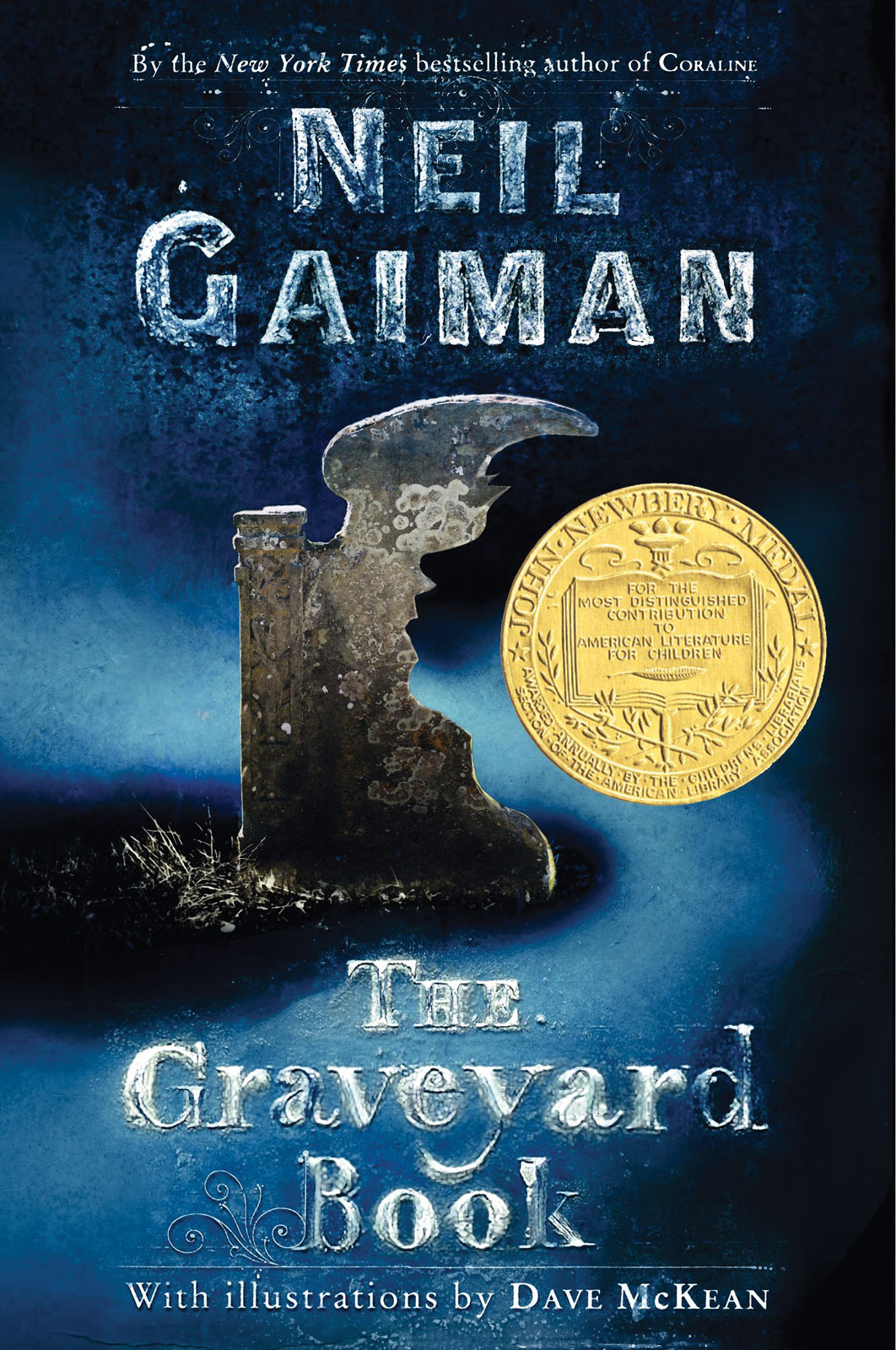
The Graveyard Book
Neil Gaiman
Fiction/Young Adult
To Buy Amazon - Barnes & Noble


I'd first heard of The Graveyard Book as I was browsing for another of Neil Gaiman's books, and stumbled across a 'meet the author' video interview on a bookseller's website. The interview was about his then-new book, The Graveyard Book. A play on The Jungle Book(s), The Graveyard Book tells the tale of a boy not raised by animals in a jungle, but by ghosts (and other paranormal creatures) in a graveyard.

Originally I was under the impression that it was a children's book. I actually continued to think that as I picked it off the shelf of my local library (audio-book form, narrated by @neilhimself), but chose it anyway, because what the hell, nothing else looked better, and I know I loved Stardust (movie) and Neverwhere (audio, review a few weeks ago), so it wasn't really a risk.

The book begins with murder. Actually he's killed everyone just before the book begins, but there is intention for more immediate bloodshed. Red Flag. Doesn't seem like a children's book after all. Don't be put off, it isn't all completely evil and terrifying - it is actually the tale of the boy he intended to kill, but couldn't find - Nobody 'Bod' Owens - The Graveyard Boy. 

I've gushed about Neil Gaiman's narration before, but seriously guys, if you like his stuff...have him read it to you (this is where free library lending comes in handy...audio-books are expensive). As usual, Gaiman's writing is dripping with Gothic style writing, and is driven by plot. It reminded me a lot of Neverwhere actually, though they are definitely different stories - they had a lot in common (though maybe it is just his particular style of writing and taste in stories).

Interesting fact (hold your breath): About half through, the story gave me a MAD craving for some Harry Potter....

The Graveyard Book is about a boy. The boy has mentors and makes mistakes. He is not thrown, in this case, into a world he does not know, but he is curious about it, and slowly ventures outside of his own (despite many warnings). He has a safe haven, and there is something evil after him. There is magic and ghosts and bullies and friendship. This isn't a rip-off of Harry Potter, many of these traits are of young/adolescent boys anyway, and the other traits are of interesting plot. It's just a good story. 

Since there are some things in this book that could be frightening, I recommend it for people thirteen and older, though it is always a personal decision. If you are thirty and still get nightmares from images of ghouls, you probably shouldn't read this. If you have a nine year old who eats ghouls for breakfast, by all means...

You get what I'm saying...

Read this one, or read something else - but do yourselves a favor and read something.