Showing posts with label Young Adult. Show all posts

July 12, 2012

Book Vs Movie: A Steampunk Adventure


The Golden Compass

Philip Pullman
Young Adult
Fantasy Adventure
(movie information below)


The Golden Compass is part one of a young adult trilogy (The Subtle Knife and The Amber Spyglass are the titles of the other two installments). I first began my journey with this story in middle school, when my best friend, also an avid reader, suggested I read an old scruffy paperback copy of hers.


The story gripped me immediately: a young tomboy orphan girl, Lyra, who resides in a renowned college in Oxford but runs the streets as a gypsy, is longing to go on an adventure to the North, a land of ice bears and mystery. She gets a chance when a beautiful and sophisticated woman comes to visit the college, Mrs. Coulter. Coulter recruits the young girl to be her assistant, reasoning with the master of the college that a young girl simply cannot be raised by a bunch of old men. Meanwhile, children all over Lyra’s world have been disappearing unexpectedly, never to be seen again. Before Lyra departs with Mrs. Coulter, the master of Jordan College gives her a valuable relic, the Golden Compass (also referred to as an Aletheometer), with instructions never to tell anyone she has it – he also mentioned that it had belonged to Lyra’s uncle, Lord Asriel, who was absent, exploring in the North.  After a whirlwind of makeovers and shopping, Lyra’s sense of adventure rears it's head, and she decides to sneak away from Mrs. Coulter and take the Golden Compass to Lord Asriel.

In between the lines of this simple seeming adventure are heavy themes that can either be taken at face value as part of the story, or as a sort of commentary on humanity, religion, and science in our own world. The plot is riddled with interesting characters that keeps excitement up, and keeps kids interested. Things like Armored Bears, Gyptians who reside on longboats, Witches who age very slowly and do not feel the cold (well, they feel it, but can ignore it), and a feisty aeronaut (what we would call a Hot Air Balloon man) fill the pages with endearing and sometimes freighting eccentricities. I highly recommend this series to anyone middle school level and older. I'm talking full grown men could enjoy this series, because as I said, the themes resonate throughout humanity.


A movie was made of The Golden Compass in 2007 based on the novel, directed by Chris Weitz and starring Nicole Kidman (Mrs. Coulter), Daniel Craig (Lord Asriel), and Dakota Blue Richards (who plays Lyra).


I was excited to see the movie as soon as I heard it was coming out (I think I first saw the preview in the theater when I went to see the remake of The Poseidon Adventure, called simply Poseidon), since I cherished the books so much growing up. On the part of Hollywood, I think it was a good idea to make the first installment of this adventure into a movie; not only is this book a great foundation for a larger adventure spanning the universe and many creatures, but it is well rounded enough to be able to stand alone and still make a great movie. There were many changes, and a lot cut out, but the movie, in my opinion, doesn't suffer much from it.


The biggest sort of difference I felt between the two, is the demographic they were made for. The movie felt like a kids/family movie, while I never really got that impression by the books. Obviously they were not written for adult readers, but the books didn't necessarily read as children's, or even young adult. When I first read them in middle school, it was a challenge to adjust to the type of words Pullman used. For example, he used a special character 'æ' in a word that appeared very often throughout all three books. If I decided to read them again tomorrow or even five years from now, I wouldn't feel like I was reading a children's book, but I will always feel that The Golden Compass movie is geared towards younger kids, even though (while played down) there re some scary occurrences.


I think one thing the movie sacrificed is a lot of the prominent themes that make this series (especially this first book) enjoyable for adults. The story is jam packed with commentary about the treatment of children, the over protectiveness of establishments of power over citizens, religious commentary, and the metaphysical. The movie barely scratches the surface of half of these, and doesn't convey the urgency of understanding the concepts. What does shine through from the book are the themes of loyalty, friendship, and the warning of having blind faith/trust in something/someone (I am using a lot of slashes in this review!), which are more childish. I can understand why the movie makers had to choose which themes to include, and which to enhance further...it's just simply something you have to do when adapting novel to screenplay.


One thing the movie did very well was the steampunk aspect. Gyrocopters, Zeppelins, clockwork spies...it gives you the impression of the differences between our world and Lyra's. With a movie you get a lot of chances to get more creative and literally show the audience they're in another world. I thought it was very well done, and not over the top, which could be tricky. Also I'd like to say that I LOVE the steampunk concept and I'm very excited that it's becoming bigger and more popular in today's market (though not too popular I hope, vampire romance fiction anyone??).


Of course, if you are reading this trying to decipher whether or not it will be worth your time to read the book(s), or if the movie will suffice, I beg you to do the reading. I think I like the second two books better than the first, which doesn't always happen with a trilogy. I don't think they are planning on making The Subtle Knife or The Amber Spyglass into movies, in fact, they changed the ending of the first book in the movie, and I'm not sure how they'd recover that for a sequel...but never mind that! It doesn't matter because you are all going to go read the books instead!


Winner: Book!


Until next time,
Happy Reading Everyone!

December 6, 2011

A Wicked Children's Book

Plain Kate
Erin Bow
Young Adult Fantasy


As you can tell by my recent lack of posting, the time I've allotted in my life for reading hasn't really been up to snuff lately, not that I sit back and allot time for things in my life, but you get what I mean (hopefully). My plan has been to remedy that with audio books listened to while working (don't worry guys, I'm a hard worker and even better multi-tasker, my work performance is in no way affected by whatever I listen to during the day...thought I'd throw that disclaimer out there). This resolution has led to several recent trips to the library, which is convieniently located just across the street from my work building...
I read (listened to --) this book by accident. As it happens, they do not have 'adult fiction' and 'young adult fiction' sections of audio books at my library, which is where I was when I noticed this book - in audio format - obviously. I had already picked two other books, and was tentatively browsing for a possible third when I saw the colorful, interesting cover of this one. I read about half a sentence of the synopsis on the back - "Plain Kate lives in a world of superstitions and curses, where a song can heal a wound and a shadow can work deep magic." - and added it to my pile of auditory literature. For no reason in particular, I chose this of the three to listen to first. (WHY do I always have to explain the entire story of how I came to read something? How lame am I for doing this??)

 So about the book - I had somewhat of a hunch this was a young adult fiction book before I started it, but was hoping it wasn't. It's not that I have anything against YA, but I've grown up and out of that stage, though I enjoyed reading the angst-y dramatic soul searching morals of that genre up until a few years ago (and still enjoy a really good one every once in awhile if the writing is good enough to compel me). 30 seconds into this book and I pressed pause to re-evaluate my choice. 

First, let me distinguish a distinct difference between actually reading a book and listening to one. You cannot see the pages of an audio book. You have the freedom to look at whatever you choose while you listen, which can cause much more distraction if you are not careful, but I think there is just something fundamentally different between reading to yourself mentally and being read to. (This subject may lead to it's own blog post soon.) Recalling specific details is more difficult. When I think back on a certain passage, it, for whatever reason, helps me to picture the words on the page, which I can't do if I've never seen the page. It is one of those things you don't notice until it isn't there, like the noise of your fish tank running at night, or the noise of anything electronic, really. Read any poetry and you'll know, things don't sound quite the same in your mind as they do read aloud. Keep this in mind if you are considering an audio book.

The justification for that brief divergence of topic - this book sounds a little kiddie. The sentences were short, and simple language was used. This would be okay if the subject matter were a little bit less, uh, frigging horrific. I kept thinking to myself during the book - this author needs to pick her audience a little better, the writing is geared toward younger readers, around ten I would say (from how it sounded, I didn't actually see the words, which is probably enormously helpful when making an assessment such as this, but take it however you will), but the subject matter of human cruelty, starvation, being orphaned, loneliness, death, trickery, references to blood everywhere (needed to work powerful magic spells), and witch burning - I thought was not fit for such young people. 

The story is about a young girl who loves her father. He teaches her carpentry with which she later supports herself (to a point). Her father dies in a plague people say is caused by witches, which in turn causes people across the country to persecute and burn persons suspected of witchcraft. Kate is orphaned and forced to leave her home and sleep in a drawer. She finds some cats, and miraculously she survives four years without starving. Townsfolk start gossiping that she may be a witch and she is forced to leave. A real witch barters her shadow for her secret wish, which is to have someone to talk to, and all of the sudden her cat can talk. The rest of the book is spent with Kate trying to get her shadow back, and I guess there is something of a mystery involving the witch who took her shadow (and nearly every other character Kate conveniently meets on her journey). Also, this book was set in a Scandinavian-esque country - but there weren't many ways you could tell throughout the writing, though at the same time it was made blatantly obvious. For example - Plain Kate's last name is Svetlana (full first name is Katerina). The country's name is Samilae (had to look up this proper spelling since I'd only heard it sim-a-lay). 

So many reviews I just browsed over on goodreads.com gush about how they cannot believe this is Erin Bow's first novel, while to me, it screamed inexperienced from the first track. I know most of you who read this blog wouldn't be interested in YA, but if by happenstance someone who is looking for good YA to read and has ended up here, this is for you: I would not recommend this book. There are so many other good books out there it's ridiculous. If you happen to love books about magic and hardship and cheesy mysteries, go ahead and try Plain Kate, it seems plenty of other people have enjoyed it (the average rating on goodreads.com is 3.83, which is somewhat high -- I gave it a 2 -- seriously, it baffles me how many people loved it). Here is a list of YA books to consider instead of this one: 
Ender's Game - Orsen Scott Card
This Lullaby - Sarah Dessen
The Giver - Lois Lowry
The Hunger Games series - Suzanne Collins
His Dark Materials series - Philip Pullman
The Sisterhood of the Traveling Pants - Ann Brashares
HARRY POTTER series - Jo Rowling
Hatchet - Gary Paulsen.


Hope to have new reviews up soon. Thanks for reading!


October 19, 2011

A Voice to Soothe You to Sleep

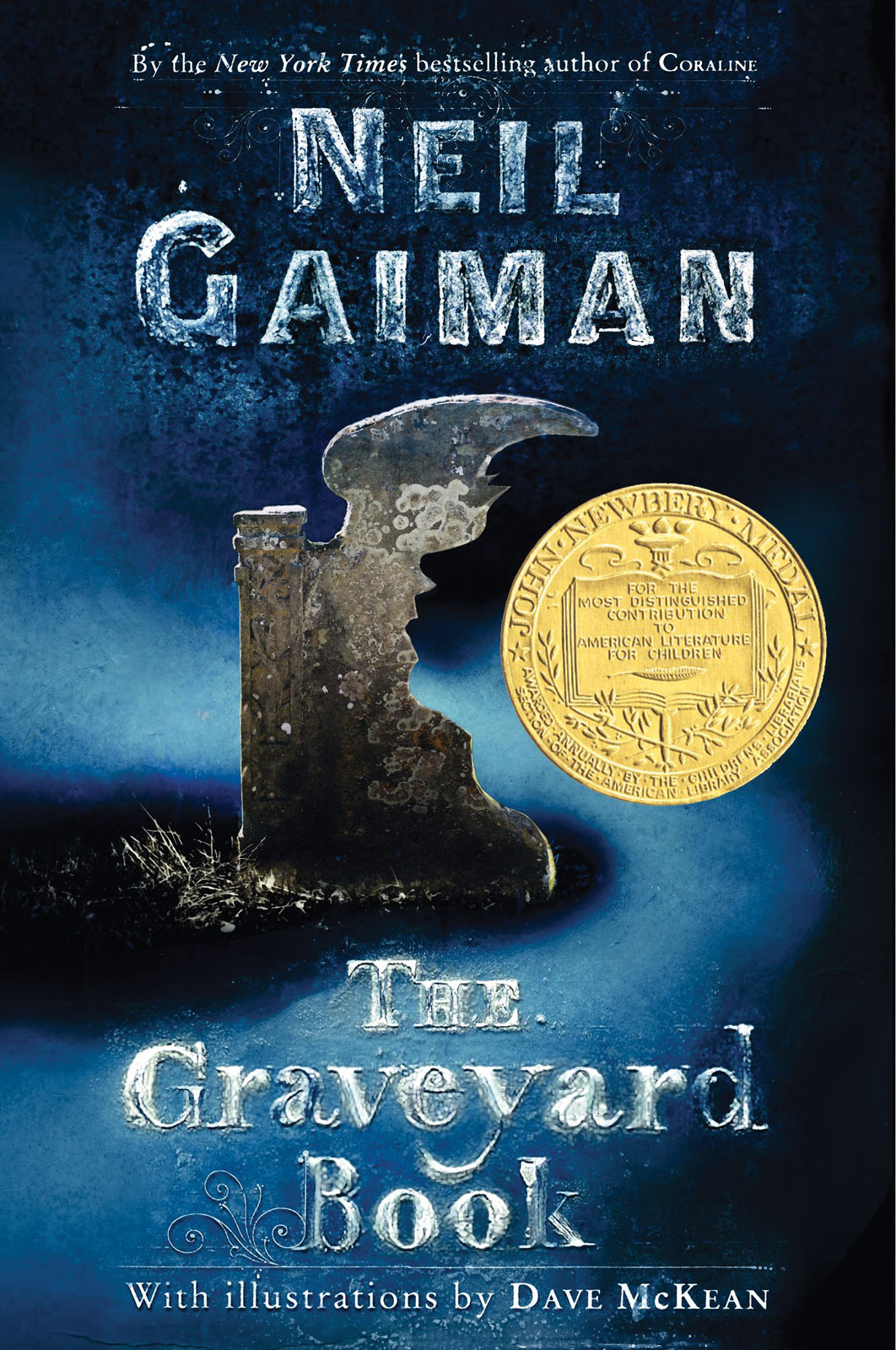
The Graveyard Book
Neil Gaiman
Fiction/Young Adult
To Buy Amazon - Barnes & Noble


I'd first heard of The Graveyard Book as I was browsing for another of Neil Gaiman's books, and stumbled across a 'meet the author' video interview on a bookseller's website. The interview was about his then-new book, The Graveyard Book. A play on The Jungle Book(s), The Graveyard Book tells the tale of a boy not raised by animals in a jungle, but by ghosts (and other paranormal creatures) in a graveyard.

Originally I was under the impression that it was a children's book. I actually continued to think that as I picked it off the shelf of my local library (audio-book form, narrated by @neilhimself), but chose it anyway, because what the hell, nothing else looked better, and I know I loved Stardust (movie) and Neverwhere (audio, review a few weeks ago), so it wasn't really a risk.

The book begins with murder. Actually he's killed everyone just before the book begins, but there is intention for more immediate bloodshed. Red Flag. Doesn't seem like a children's book after all. Don't be put off, it isn't all completely evil and terrifying - it is actually the tale of the boy he intended to kill, but couldn't find - Nobody 'Bod' Owens - The Graveyard Boy. 

I've gushed about Neil Gaiman's narration before, but seriously guys, if you like his stuff...have him read it to you (this is where free library lending comes in handy...audio-books are expensive). As usual, Gaiman's writing is dripping with Gothic style writing, and is driven by plot. It reminded me a lot of Neverwhere actually, though they are definitely different stories - they had a lot in common (though maybe it is just his particular style of writing and taste in stories).

Interesting fact (hold your breath): About half through, the story gave me a MAD craving for some Harry Potter....

The Graveyard Book is about a boy. The boy has mentors and makes mistakes. He is not thrown, in this case, into a world he does not know, but he is curious about it, and slowly ventures outside of his own (despite many warnings). He has a safe haven, and there is something evil after him. There is magic and ghosts and bullies and friendship. This isn't a rip-off of Harry Potter, many of these traits are of young/adolescent boys anyway, and the other traits are of interesting plot. It's just a good story. 

Since there are some things in this book that could be frightening, I recommend it for people thirteen and older, though it is always a personal decision. If you are thirty and still get nightmares from images of ghouls, you probably shouldn't read this. If you have a nine year old who eats ghouls for breakfast, by all means...

You get what I'm saying...

Read this one, or read something else - but do yourselves a favor and read something.

October 10, 2011

Looking Back: Hunger Games

The Hunger Games
Suzanne Collins
Fiction/Thriller/Young Adult
To Buy Amazon - Barnes & Noble


The story of The Hunger Games, by Suzanne Collins begins with an introduction to Katniss, her family, and her district. The story of Katniss’ life is revealed a little at a time in skillful doses, and we find we know just enough to fully understand the consequences of every situation.
The day is Reaping Day, a day that terrifies the Districts but is masked in mild celebration, where one boy and one girl between the ages 12 and 18 are randomly selected to take part in the Hunger Games each year. The Hunger Games are a barbaric gladiator-esque public masquerade which are mandatorily viewed by the entire kingdom, including the victim’s families. I use the word victim because the children are put into an arena and forced to fight to the death. The games to not end until there is only one child remaining. It is commonplace for ‘tributes’, for that is what the contestants are called, to starve, freeze, drown, or burn to death, as well as strive to kill one another, in order to survive themselves. The gamemakers are utterly in control of all aspects of the arena, using natural forces to herd the tributes wherever they want in order to put on an amusing show for the rest of the kingdom.
We are informed about the rebellion that happened about 75 years previous, which led to the founding of the games, as a punishment to the districts and a reminder of the Capitol’s power and influence over every aspect of kingdom life. I find it interesting that Collins uses the term ‘Reaping Day’, which implies a harvest, or a gathering of profits. Gathering the child sacrifices to battle on ‘live television’ to their gruesome deaths.
The set up of the country Katniss is a part of reminds me of a kingdom. The Capitol is the Castle in this scenario, housing a portion of the population who is close to the ‘king’, and take part in the castle lifestyle, which is separated from the rest of the kingdom. It follows that districts 1-12 then, house the serf population. A serf is one who rents a space from the noble, the head of the castle, to live with his family with meager means, paying whatever taxes the noble sets, which can include a portion of whatever crops the serf’s land yields, leaving the serf and his family with barely enough to survive.
Castle hierarchy directly correlates to the conditions the people of the Districts live, with ties to communism also. The men in District 12 have to work in the coal mine with no choice to do otherwise, and they do not get to keep any coal but what they happen to drag in on their boots. The people in Rue’s district, District 11, have to work in the orchards and fields, but do not get to keep any of the delicious food they harvest. They get paid a meager wage that can barely support their families, most need assistance from the government (which racks up their chances to be chosen for the games), and people regularly starve to death in the streets, though no one in a place of power will acknowledge the fact (never listing starvation as cause of death). They even have a mayor, though it does not become clear what role he or she plays in the District, it is only revealed that they are better off financially than their struggling counterparts.

This book is PACKED with social commentary and governmental features that really make you sit back and think, because, as we know, this is a work of fiction, but within these pages, this world is absolutely plausible. To me, this is the best part of science-fiction - taking you into a world that you could see developing from the structure we currently have. I could go on forever about these details, but I don't want to spoil everything.
The games Katniss and Peeta participate in stands apart from any either of them have ever seen. For one, Katniss and Peeta form a strategy of teamwork rather than competitiveness toward each other, spending as much time together during training as possible, while others have their minds set against their adversaries, knowing they’ll have to kill them, or be killed themselves.
Katniss and Peeta are both utterly terrified of the Games, Katniss worried for her family who depends so much on her, and Peeta, because he has no confidence in himself to win. After declaring his crush on Katniss, Peeta sets the standard of a Hunger Games guaranteed to entertain more than most. Torn between each other, and the impossible task they are faced with, the Hunger Games is a novel you will not soon forget, and will leave you wanting more.
It may be a young adult novel, but, like any futuristic dystopia, The Hunger Games makes us all open our eyes a little bit wider to the world around us and what we can do to help prevent a harsh and unforgiving future.
Another reason to adore the hunger games: it puts a name to a feeling we’ve all had at one point or another: Hollow Day: A day when no matter how much you eat, you still want more.
While this synopsis seems to portray a very bleak and hopeless novel, I promise you, it is full of as much love and hope and friendship as it is with sorrow and fear. We quickly fall in love with our leading lady, Katniss, and she never ceases to surprise.
Clearly well written, I waited all of three minutes before downloading the second and third installments onto my Nook after completing The Hunger Games. Already I am a hundred pages into book two: Catching Fire.
Do yourselves a favor and pick this one up. You won’t be sorry.