Showing posts with label Audio-Book. Show all posts

July 29, 2012

Classic Romance/Modern Twist

Juliet
Anne Fortier
Narrated by Cassandra Campbell
Fiction/Romance/Adventure
16 discs, 20 hours


This book hit the wrong nerve with me from the very beginning. I kept reading because I had an audiobook copy (so no effort, basically), and I got it in order to write a review. In the end, I'm glad I finished it, but I didn't necessarily like it. There are a few spoilers in this review, so if you feel you'd like to read the book and judge for yourself, please skip to the last paragraph where I give my recommendations. 


The story is about a modern awkward twenty something girl, Julie, with a twin sister, Janice (who is nothing but a cheesy cliche), whose parents had died when they were quite young, living in Italy. Since that time, and as far back as they can clearly remember, they'd lived in the States with their great aunt, Rose and a 'handy man' Umberto (can't find the spelling anywhere, so forgive me if it's incorrect). After the death of their aunt, Julie is given the task to go back to Siena, Italy to find/protect the family treasure. 


Obviously, from the title, you can discern that there is a connection between this book and Shakespeare's Romeo & Juliet. The play (in the story) is based on actual historic families and two forbidden lovers. The story is split in two for most of the book, one side being Julie's quest in the present, and the other is the story that unfolds in the documents her mother left for her, recounting the 'true' story of Romeo Marescotti and Giulietta Tolomei from 1340 AD (If you like books with parallel stories, try The Bone Garden by Tess Gerrison. LOVED that one.). I did like the split in this story, but only because the story taking place in 1340 was infinitely more interesting than the modern plot. 


I think most of my problem was with the narration of the story. Cassandra Campbell reads the book, and though the two modern twins grew up in Virginia, she only very rarely drops into a southern twang, and then it's usually on one or two words, and then it disappears again. Also, every time she read an Italian word or name, she'd launch straight into an Italian accent, no matter who was speaking it. Irk. Personal pet peeve perhaps. 


This problem seemed to be a theme, however, as the writing and characters all experienced this inconsistency. I think the dialogue between Julie and Janice is the best example. Janice's character is the worst, because although Julie explains in detail how evil/selfish/greedy Janice is by nature, she is constantly flip-flopping between snarky bitch and 'genuinely' concerned with her sister's choices. Actually she flip flops between every emotion she is allowed to portray in this book and snarky bitch. It's as if Anne Fortier kept forgetting who Janice was supposed to be, and added smart ass remarks in editing or something. It felt very disconnected. And by the end of the book Julie and Janice are BFFs. Really? That conclusion doesn't seem reasonable from what was laid out for us in the first few chapters.


The relationship between Julie (modern descendant of Juliet) and Alessandro (modern descendant of Romeo) is absolutely schizophrenic. One night they hate each other, the next they're flirting, the next she is suspicious of him again, running away terrified, then they're back to falling in love before she finds out something more and is suspicious again and runs away. Over and over and over. Most of the time Julie had a surge of enamored emotions toward Alessandro, it wasn't when he was next to her, it was when she found out something about him from somewhere else. It didn't feel real. It didn't feel like these two modern people were meant for each other. It didn't feel like anything special was happening between them at all. 


Above all, the most annoying thing about the two girls, Julie and Janice, though it isn't mentioned TOO often, is that they are after a fortune. They both assume, once their Aunt Rose died, that they would each inherit quite a large sum of money to pay off their debts. Julie goes to Italy expecting to find a fortune their mother left for her, and is completely unappreciative of the historical documents she found, even though she had apparently been obsessed with the play Romeo and Juliet for as long as she could remember. It seems to me someone like that would consider a journal recounting the true story of Romeo and Juliet to be a priceless treasure, not a means to an end. 


Now, I don't have much of a background with Shakespeare (which I regret, and hope to remedy), and I've only read pieces of Romeo and Juliet in lit classes, but I do know the gist of the tragedy. This is why, I think, I enjoyed the 1340 version of events. I'd be interested to find out if or how much research Fortier did on the pre-Shakespeare story, to see how much she molded to fit her own means. (One more complaint, then I'm done! How is it that all of the objects that play a part in the 1340 chain of events survive to be found by the characters in the modern plot? I find that highly unlikely). 


While there were some things that just seemed a little too convenient, and most of the plot 'ah-ha's were simply misunderstandings, the story was, at least, interesting. I liked the scenes with the modern artist character Maestro *something, I totally forgot his name*. I imagined his workshop as dark, dusty, and warm. A place you could sit down and have a cup of tea surrounded by beauty, history, and mystery. He may be my favorite character (I know, how could I have forgotten his name then?). 
Also, I enjoyed learning about the details of their mother's journey, which you don't begin to learn about until the very end of the book. And of course, the bit of romance there was between modern Romeo and Juliet, just before going to the weird party of Alessandro's god-mother's. (Huge Spoiler! Though seriously, if she's a 25 year old virgin, she is not going to just sleep with this guy she's known a week and isn't even sure she can trust!). 


Overall, I think this book is a little bit of a shame, I think it could have been a whole lot better with just a little more time, and some intense editing, because the story itself is very good, and a great concept. I would recommend this book to women who like historic-ish fiction and don't mind whiny, at times unreasonable characters, which so many modern lit (especially romance) stories contain. The plot does eventually all tie together, it is just the middle that is a little messy. It is a light, semi-fast paced, and eventually endearing story. If you aren't easily annoyed by cheesy dialogue, then I think you could enjoy it. Also, I recommend a printed version. The audiobook really just didn't do it for me. 


Until Next Time!

July 19, 2012

Medieval English Monarchy

The Lady of the Rivers
Philippa Gregory
Narrated by Bianca Amato
Historical Fiction
To buy Amazon - Barnes & Noble


I checked this audio-book out from the library thinking that I probably would not even end up listening to it. Usually I tend to lean more towards shorter books, and this one was 15 discs, and it sounded like an old medieval/fantasy story, something I normally wouldn't read. I'm not sure what compelled me to check it out ultimately. And it was sheer laziness that led me to renew it twice (that's six weeks for my library district), before ever popping a disc into my computer at work to give a listen. I'm grateful now that I did.

The book captivated me from the beginning. A young noble girl from France crosses paths with Joan of Arc before she is tried and burned at the stake for heresy. This girl possess 'gifts' from being of the line of a water goddess, Melucina (Mel-You-See-Nah. The worst part about reviewing audio-books is not being able to spell the odd words/names. I try!), and realizes very early, from her exposure to Joan, that powerful women are not welcome in the world of men. The girl, Jacquetta, is married off to a Duke of England who is occupying France, the Duke of Bedford. He is an old man, whose wife had died, and marries Jacquetta because he has heard of her gifts, not for love. He is a man who has hired herbalists, scholars, and alchemist on his quest for the Philosopher's Stone, and thinks marrying a young virgin with gifts of foresight will be the key to his quest. War takes up most of the Duke's time, and Jacquetta is left mostly in the care of his most trusted squire, Richard Woodville (real name Richard Wydeville), with whom she eventually falls in love with and marries (after her old man of a husband dies, of course). Easily the most enjoyable part of the story - Jacquetta and Richard had fourteen children together, they obviously loved each other very much! Because Richard is so far below her station, they have to marry in secret before notifying the English court, because the noble men were planning another arranged marriage for Jaquetta. In those times people were always married in order to ensure allies or strengthen bonds between families/countries, which is why Jacquetta married the Duke in the first place. At this point the young King of England, Henry VI, is arranged to marry Jacquetta's cousin from France, Margaret of Anjou, and Jacquetta is called to court to be her lady in waiting. This is where the story really starts.

The most fascinating part of this story, to me, is that every character in this book is based off of real history, real lords and ladies of 1400s England (here is the wiki page, we're looking at Henry VI in the 1400s). It is highly fictionalized, for in fact, there is no way to know exactly what happened so far back, especially because so much was hidden from the common knowledge of the people, but Philippa Gregory does a fantastic job weaving the characters in and out of each other's stories, and filling in the gaps. I even looked up these old English monarch's on Wikipedia, just to see how much of the story were actual events. Turns out, all the major plot points are absolutely in the historical record. All of Jacquetta's and Richard's fourteen children, the territories won and lost, and even the rumor that Queen Margaret's only son was not born of the King, but of a Duke, and advisor to the King.

The narrating was excellent. Amato did a wonderful job of changing the pitch and tambre of her voice for each character, none of which were too garishly overdone. I consider it a good thing when I sit here at my keyboard unable to think of anything that really stood out about the narration; Amato allowed the story to be the story, which is the best thing a narrator can accomplish. There were very few instances of foreign words in the text, but where they were they were perfectly done. The only thing at all I can think is that the entire book was done in an English accent, where the main character, Jacquetta, and the Queen, who plays a huge role in the book, were both French. But honestly, that is only a technicality.

For some reason, this book captivated me more than most. I was sucked wholeheartedly into this story, and these characters, and this bit of history (no matter how embellished). I think I especially liked it because the history is so old, and so generally unknown (by me anyway, I know nothing about medieval monarchy). Frankly, I cannot wait to read another of Philippa Gregory's books, I'm just uncertain which to turn to next. That reminds me! This book is actually part of a series called The Cousin's War, and The Lady of the Rivers is book three in that series. I'm almost scared to go back and read The Red Queen and The White Queen, the first two books of the series, because from what I understand, they both deal with events after where The Lady of the Rivers leaves off, and also, I'm afraid I won't be able to stay quite as interested if I am reading words like "Duke of Bedford", "Dower to Duchess", and "Edmund, Duke of Sommerset" over and over again all over the pages. I think having this book read to me was half of the magic. At folks, it was magic.

Happy Reading Everyone!

June 30, 2012

Another Religious Adventure

The Book of Names
Jill Gregory & Karen Tintori
Fiction/Thriller
To Buy Amazon - Barnes & Noble


Here's another review for Audiobook Week (an occasion I didn't know about this until I stumbled upon a twitter hashtag on Tuesday). The book is seven discs, (8 hours), and is narrated by Christopher Graybill.

It took me awhile to warm up to Graybill's reading, as it is with nearly every audiobook I listen to. Generally my first thought on track one is something like 'this guy/gal sounds so weird, how did he/she get this job?!' but about five minutes in everything is fine, and the voice simply becomes part of the story (except in one or two very bad cases). It catches my interest when an audiobook includes some kind of audio detail that you don't always hear, and in The Book of Names, it was sort of an echo microphone effect used when characters were either thinking to themselves or conversing through a telephone. It was a little odd sounding, but it was very effective within the story. The book is broken down into very small 'chapters', usually jumping points of view as the action sets up, typical thriller set up. I've seen some audio books that use multiple narrators to cover the voices, but that wasn't the case here. Graybill used variants of his vocal range and regional accents to cover the entire character spectrum. Some of the voices seemed a little exaggerated, but there was an international cast of characters, so it worked pretty well.

It is said that there are 36 souls in each generation that are capable of complete spiritual enlightenment. If any of them die prematurely, leaving less than 36 righteous souls at any time, the world becomes more chaotic. If all of them should die, the world as we know it, comes to an end. These names were recorded by Adam from the word of God, and were passed down until eventually the Book of Names was lost in time...

I liked the story - the fast pace and interesting historical questions made the time pass quickly while I listened at work. I have a love of old cultures and traditions, so many of the subjects discussed in the book intrigued me: Kabbalah, Tarot, Zodiac, biblical references, the Tree of Life, and of course, any secret societies (there is a bit of a conspiracy theorist in me)! I have little to no knowledge about Judaism, so a lot of the content was new to me, and I'm not completely certain what was fact and what was fiction, but it doesn't detract from the story.

The plot was very DaVinci Code esque:

In the DaVinci Code, Robert Langdon, a world-renowned symbologist (a person who studies symbolism throughout time and cultures), who teaches class at Harvard University, is sought out to help solve the murder of the Louvre curator. After analyzing the body and teaming up with a police cryptographer, Langdon begins an incredible journey of puzzles, history, and alternate biblical conspiracies.

In The Book of Names, David Shepard falls off a roof when he is young, and has a near death experience. Ever since that time, names fill his mind, names he's never heard, people he's never met - and he records them in a journal. We find out that these names are the same names in the fragments recovered from Adam's Book of Names. Unfortunately, a dark, evil, secret society, the Gnosios (I think, I only listed remember? The word derives from Gnostic) also finds out that David knows these names; names they have been desperately trying to recover for generations in order to destroy the world as we know it, to have it born anew.

The plots are fairly similar, but one thing really jumped at me. In DaVinci Code, Langdon is the teacher. He goes through his adventures with a knowing and calculating mind, and all the tools he needs as his adventure progresses. Shepard, on the other hand, knew nothing of any religious affiliations or even anything strange - for all he knew, the names were just a slightly strange side effect from a nearly fatal accident when he was a kid. I mean, his degree was in political science (his dad was a senator), and neither of those facts came in handy for him, except for one character he met through his father. I'm not sure which is more annoyingly convenient; having a character that 'happens' to know everything he needs to survive, or a character that depends on the people he 'happens' to meet along the way - I think the latter, because how could he have known who to trust? If he had let the wrong sort of person know about his gift, the story could have concluded with the end of the world.

As it was, David Shepard happened to hear one of the names on the news one day as he was writing it down - the woman had been murdered. Once the initial shock passed, he began searching for the other names, finding many of them also deceased. Unsure of what to do next, he asks his best friend and colleague, a professor of religion, who refers him to a Rabbi, and the adventure goes from there. Before he sees the Rabbi, however, he received a call from his step-daughter, whose mother had just remarried. The new husband adopted the daughter, changing her name to something very familiar to David...one of the names on his List...the list of people who mysteriously end up dead.


June 26, 2012

A Humorous Bite of Life

Bossypants
Tina Fey
Memoir/Humor


I am a huge fan of memoirs. I’ve read only a handful at this point, but I’ve enjoyed them all quite thoroughly (small insight into my life? I have never been able to spell ‘thoroughly’ without spell check – I know, really Emma??). I found Bossypants as an audiobook in my local library, and listened to it while diligently working, as I do.

I found Bossypants much more well-rounded than I expected. I’m not sure why I’m always surprised by the validity of books with cheesy/humorous titles, besides the same reasons other people have for the same thought. I was aware of how popular the book was, which is usually a turn off for me, but by now the hype has died down about it, and it was sitting there so politely on the library shelf on display. The rest, my bookish followers, is history.

The Bossypants audiobook is, as the best ones are, narrated by the author. The book is about 5 ½ hours on 5 discs and includes a PDF file for embarrassing/milestone photographs. One of the best things about this audiobook, that differs from other audiobooks that I’ve read so far, is that Fey recognized her readers as ‘listeners’ and changed some things to be more suited to her audience. Brilliant. She often related that there was a corresponding picture to the anecdote currently being discussed to be found in the PDF, and the original SNL skits are actually played for us to hear in the chapter about Tina’s ‘Sarah Palin days’.

I was surprised at how much I liked Tina Fey. I’d heard of her before, I knew enough about her to know she was on Saturday Night Live (which I’ve only seen skits of on youtube), and to recognize her by sight (she was in Mean Girls, for instance, but did you know she wrote the screenplay too?), but beyond that...clueless. When writing about her life, she made the awkward and light-hearted things laugh out loud funny, but kept the serious things serious, which brought the well-rounded feeling overall. She wrote a lot about growing up and becoming a woman, into her improve days, and how all that has helped her in her life today. The part I enjoyed the most were the bits about her daughter and parenthood (both the funny and serious parts), and I loved how honest she was throughout (no problem spelling that one, by the way!). The book was closed (I don’t consider this a spoiler because it is a memoir after all, and she is a celebrity) by her internal debate on whether or not to have another baby, and how at the end of the day, it was her decision, no matter how many things hung in the balance (possibly the difference between sanity and the alternative).

The only thing I wasn’t so sure about is the title. The book led up to her show, 30 Rock, of which I guess she is ‘The Boss’, but she didn’t necessarily write about being the boss. She did talk about the inner-workings of the TV show a bit, and how she is involved in the many aspects of it….I guess when I think of ‘Boss’, it’s the managing people part of it that I think of. I didn’t really get much of that from the book here, which is not necessarily a bad thing, just something I noticed. And 30 Rock is after all, only a small piece in the book that is Tina Fey’s life.

I would highly recommend this book to everyone, in every walk of life – after all, who doesn’t need a good laugh? This book was energetic and refreshing and a joy to read. I’m seriously considering purchasing (the audiobook version) for myself to keep listening to forever, but the price is not quite right for this point in my life ($20!). [This is the reason all the audiobooks I review come from the library!] My alternative is the paperback version. But if you can get your hands on the audiobook version, I’m telling you, you won’t be sorry!

Excuse me, everyone, while I go look up how much “Is Everyone Hanging Out Without Me” by Mindy Kaling is on NookBook!

December 6, 2011

A Wicked Children's Book

Plain Kate
Erin Bow
Young Adult Fantasy


As you can tell by my recent lack of posting, the time I've allotted in my life for reading hasn't really been up to snuff lately, not that I sit back and allot time for things in my life, but you get what I mean (hopefully). My plan has been to remedy that with audio books listened to while working (don't worry guys, I'm a hard worker and even better multi-tasker, my work performance is in no way affected by whatever I listen to during the day...thought I'd throw that disclaimer out there). This resolution has led to several recent trips to the library, which is convieniently located just across the street from my work building...
I read (listened to --) this book by accident. As it happens, they do not have 'adult fiction' and 'young adult fiction' sections of audio books at my library, which is where I was when I noticed this book - in audio format - obviously. I had already picked two other books, and was tentatively browsing for a possible third when I saw the colorful, interesting cover of this one. I read about half a sentence of the synopsis on the back - "Plain Kate lives in a world of superstitions and curses, where a song can heal a wound and a shadow can work deep magic." - and added it to my pile of auditory literature. For no reason in particular, I chose this of the three to listen to first. (WHY do I always have to explain the entire story of how I came to read something? How lame am I for doing this??)

 So about the book - I had somewhat of a hunch this was a young adult fiction book before I started it, but was hoping it wasn't. It's not that I have anything against YA, but I've grown up and out of that stage, though I enjoyed reading the angst-y dramatic soul searching morals of that genre up until a few years ago (and still enjoy a really good one every once in awhile if the writing is good enough to compel me). 30 seconds into this book and I pressed pause to re-evaluate my choice. 

First, let me distinguish a distinct difference between actually reading a book and listening to one. You cannot see the pages of an audio book. You have the freedom to look at whatever you choose while you listen, which can cause much more distraction if you are not careful, but I think there is just something fundamentally different between reading to yourself mentally and being read to. (This subject may lead to it's own blog post soon.) Recalling specific details is more difficult. When I think back on a certain passage, it, for whatever reason, helps me to picture the words on the page, which I can't do if I've never seen the page. It is one of those things you don't notice until it isn't there, like the noise of your fish tank running at night, or the noise of anything electronic, really. Read any poetry and you'll know, things don't sound quite the same in your mind as they do read aloud. Keep this in mind if you are considering an audio book.

The justification for that brief divergence of topic - this book sounds a little kiddie. The sentences were short, and simple language was used. This would be okay if the subject matter were a little bit less, uh, frigging horrific. I kept thinking to myself during the book - this author needs to pick her audience a little better, the writing is geared toward younger readers, around ten I would say (from how it sounded, I didn't actually see the words, which is probably enormously helpful when making an assessment such as this, but take it however you will), but the subject matter of human cruelty, starvation, being orphaned, loneliness, death, trickery, references to blood everywhere (needed to work powerful magic spells), and witch burning - I thought was not fit for such young people. 

The story is about a young girl who loves her father. He teaches her carpentry with which she later supports herself (to a point). Her father dies in a plague people say is caused by witches, which in turn causes people across the country to persecute and burn persons suspected of witchcraft. Kate is orphaned and forced to leave her home and sleep in a drawer. She finds some cats, and miraculously she survives four years without starving. Townsfolk start gossiping that she may be a witch and she is forced to leave. A real witch barters her shadow for her secret wish, which is to have someone to talk to, and all of the sudden her cat can talk. The rest of the book is spent with Kate trying to get her shadow back, and I guess there is something of a mystery involving the witch who took her shadow (and nearly every other character Kate conveniently meets on her journey). Also, this book was set in a Scandinavian-esque country - but there weren't many ways you could tell throughout the writing, though at the same time it was made blatantly obvious. For example - Plain Kate's last name is Svetlana (full first name is Katerina). The country's name is Samilae (had to look up this proper spelling since I'd only heard it sim-a-lay). 

So many reviews I just browsed over on goodreads.com gush about how they cannot believe this is Erin Bow's first novel, while to me, it screamed inexperienced from the first track. I know most of you who read this blog wouldn't be interested in YA, but if by happenstance someone who is looking for good YA to read and has ended up here, this is for you: I would not recommend this book. There are so many other good books out there it's ridiculous. If you happen to love books about magic and hardship and cheesy mysteries, go ahead and try Plain Kate, it seems plenty of other people have enjoyed it (the average rating on goodreads.com is 3.83, which is somewhat high -- I gave it a 2 -- seriously, it baffles me how many people loved it). Here is a list of YA books to consider instead of this one: 
Ender's Game - Orsen Scott Card
This Lullaby - Sarah Dessen
The Giver - Lois Lowry
The Hunger Games series - Suzanne Collins
His Dark Materials series - Philip Pullman
The Sisterhood of the Traveling Pants - Ann Brashares
HARRY POTTER series - Jo Rowling
Hatchet - Gary Paulsen.


Hope to have new reviews up soon. Thanks for reading!


October 19, 2011

A Voice to Soothe You to Sleep

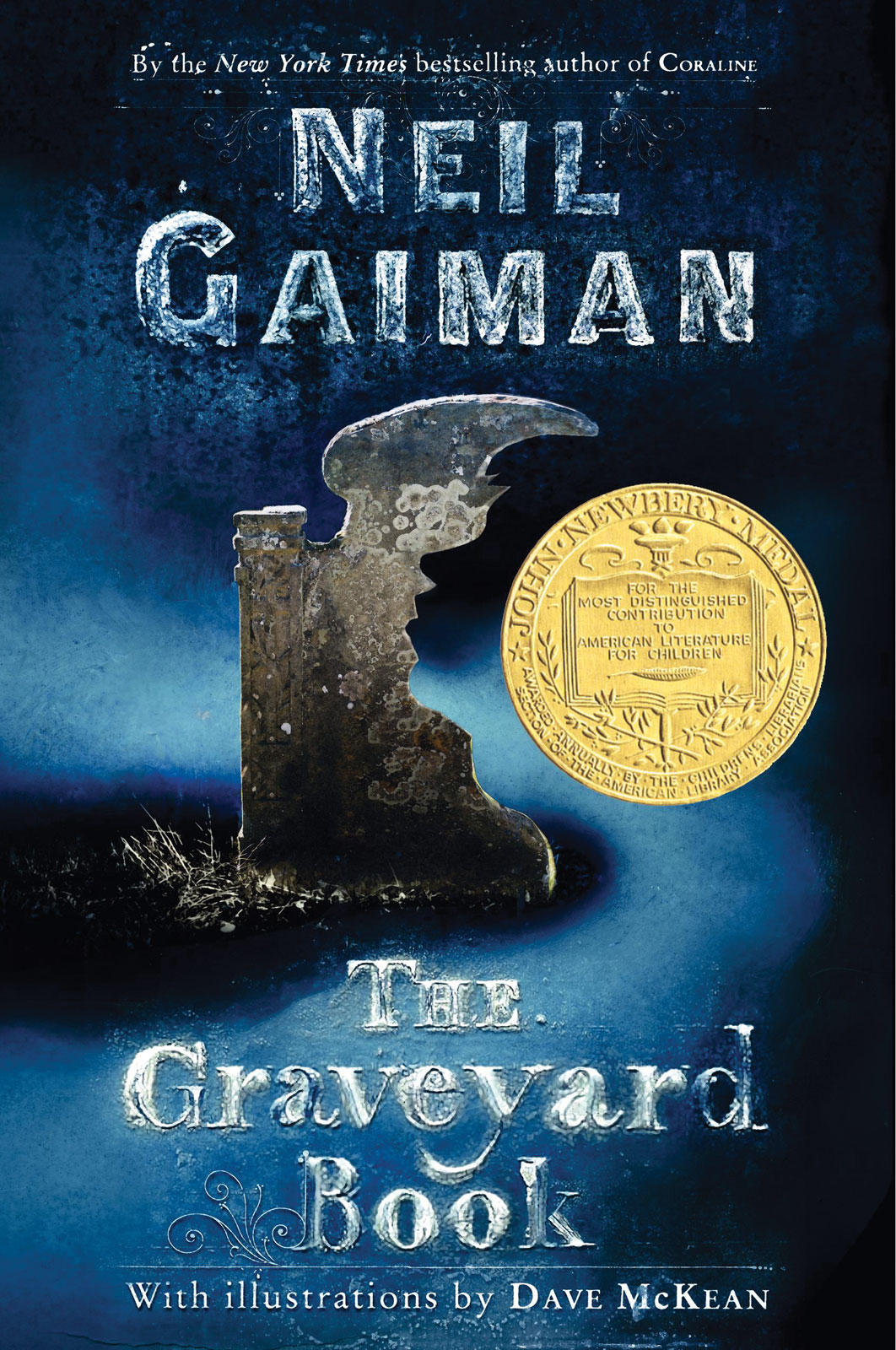
The Graveyard Book
Neil Gaiman
Fiction/Young Adult
To Buy Amazon - Barnes & Noble


I'd first heard of The Graveyard Book as I was browsing for another of Neil Gaiman's books, and stumbled across a 'meet the author' video interview on a bookseller's website. The interview was about his then-new book, The Graveyard Book. A play on The Jungle Book(s), The Graveyard Book tells the tale of a boy not raised by animals in a jungle, but by ghosts (and other paranormal creatures) in a graveyard.

Originally I was under the impression that it was a children's book. I actually continued to think that as I picked it off the shelf of my local library (audio-book form, narrated by @neilhimself), but chose it anyway, because what the hell, nothing else looked better, and I know I loved Stardust (movie) and Neverwhere (audio, review a few weeks ago), so it wasn't really a risk.

The book begins with murder. Actually he's killed everyone just before the book begins, but there is intention for more immediate bloodshed. Red Flag. Doesn't seem like a children's book after all. Don't be put off, it isn't all completely evil and terrifying - it is actually the tale of the boy he intended to kill, but couldn't find - Nobody 'Bod' Owens - The Graveyard Boy. 

I've gushed about Neil Gaiman's narration before, but seriously guys, if you like his stuff...have him read it to you (this is where free library lending comes in handy...audio-books are expensive). As usual, Gaiman's writing is dripping with Gothic style writing, and is driven by plot. It reminded me a lot of Neverwhere actually, though they are definitely different stories - they had a lot in common (though maybe it is just his particular style of writing and taste in stories).

Interesting fact (hold your breath): About half through, the story gave me a MAD craving for some Harry Potter....

The Graveyard Book is about a boy. The boy has mentors and makes mistakes. He is not thrown, in this case, into a world he does not know, but he is curious about it, and slowly ventures outside of his own (despite many warnings). He has a safe haven, and there is something evil after him. There is magic and ghosts and bullies and friendship. This isn't a rip-off of Harry Potter, many of these traits are of young/adolescent boys anyway, and the other traits are of interesting plot. It's just a good story. 

Since there are some things in this book that could be frightening, I recommend it for people thirteen and older, though it is always a personal decision. If you are thirty and still get nightmares from images of ghouls, you probably shouldn't read this. If you have a nine year old who eats ghouls for breakfast, by all means...

You get what I'm saying...

Read this one, or read something else - but do yourselves a favor and read something.

October 17, 2011

Warning: Big Fat Waste of Time...Mostly

The Egyptologist
Arthur Phillips
Novel of Correspondence/Mystery/Audio-Book


Another Audio-Book guys, but this one was disappointing for me after listening to a gem like Neverwhere, by Neil Gaiman. The Egyptologist is told in a series of letters and journal entries - the journal from the early 1900s, and letters from 'present' day.

I was a little bit skeptical about the book having several narrators, but that was before I knew the book is told as a correspondence. As it turns out, it worked out very well that way: An Englishman for the 'focus' character, an Australian as the Snoop, and an American for the Bostonian girl. 

But...

It was boring. 3/4 of the book consists of boring over-detailed journal entries from the main character who is engaged to said Bostonian girl, daughter of his financier, and is on a 'dig' in Egypt for an Ancient Egyptian King who may or may not have existed. This man is both annoying and slightly insane (progressively more-so throughout the book). I found myself looking forward to the 'Snoop's letters. You know from the beginning that he starts out looking for a man who has gone missing in order to give him a large inheritance, and ends up stumbling onto a double murder. The mystery is who died and how. I wasn't sure who, or how, but I had a hankering feeling - hoping there would be a twist from what I expected, though I was right. Maybe that is part of the reason the end didn't justify the means. Perhaps if I didn't know what was going to happen at the end, I would have enjoyed it more. The ending was carefully put together.

Also, I liked the girl, though she was an opium addict. Her narrator's voice was very interesting. Like she was hiding an exotic accent. Also, the Snoop being Australian was pretty neat. Not too often I get to hear that :-)

All in all, I wouldn't recommend this book. It is pretty long for a standard fiction book, and the payoff wasn't worth the time. As an audio-book it wasn't so bad, but near the end I almost couldn't stand the insanity of the English-guy. Good Lord. I think the author probably could have made it 200 pages shorter with no consequence. Eh, at least it's over now.

October 2, 2011

And if there were another, magic side to your city...

Neverwhere
Written and Narrated by Neil Gaiman
Fantasy/Fiction


I once saw a movie about a quest for love that included falling stars, magic, adventure, murder plots, flying pirates, and cross-dressing. It was an adult-suitable fairy-tale, and it was wonderful [and I got it in a $5 bin!]. I did not know until recently that the movie, Stardust, is based on a book written by Neil Gaiman. Since I learned of the connection, I've been curious to read some of his other work. Then one day, I was walking through the audio-book section at the library in a happy coincidence and I caught Neverwhere out of the corner of my eye - the author's selected text, read by himself - how sweet it that?!

I went home and immediately loaded it onto my Zune [microsoft's version of ipod], and that week, I listened to this amazing story at work [do I have the best job ever, or what]. From the start I loved it. Well, that isn't surprising to me, since I'm a beginnings kind of girl, but this beginning is even better than most. Is it because the characters were 100% authentic because Neil himself [his twitter handle, I'm so clever] wrote them and therefore knows how they said each thing he wrote, and does an incredible job with accents - perhaps; but I certainly recommend listening for yourself.

In case you have no idea what this book is about, basically this guy has a mediocre life that he thinks he quite enjoys, until he meets Door. She is laying in the middle of the street bleeding like mad, and he, being the great guy that he is, takes her home to care for her. She introduces him to a whole new side of London, one he can't seem to escape. The story is incredibly imaginitive and pokes fun of many of the London subway stations' names [like that is a selling point...come on Em]. The version I listened to was 10 discs and took me three of four days to get through. I almost decided to listen to it again before I did this review, but couldn't really justify that, even to myself [its that good].

It is so hard for me to put into words how good this story is. His characters [in both Neverwhere and Stardust] are clearly defined and have their own agendas, and they each have a purpose in his story. And he is a masterful story-teller, my friends. I almost tried to resist reading his books because he is so immensely popular - but his status among readers is very well deserved, and I find I've jumped right on the bandwagon. If you read my In My Mailbox post, you know I just got American Gods. I actually ordered it before I found Neverwhere at the library. Now I'm definatly glad I got it [any of you read American Gods? How is it? How does it compare to Neverwhere?].

Gaiman has also written a whole mess of graphic novels, if you like those, and is a skilled screenwriter. He also has a twitter [as I so cleverly mentioned before] and a tumblr and his white german shephard makes frequent appearences on both. I am sure being so active in the online community does nothing to quell the devoted fans obsessions. But seriously, check him out.

September 23, 2011

Book Club Book: A Novel of Temptation

The Devil and Miss Prym
Paulo Coelho
Narrated By: Linda Emond
Fable (Allegory)/Fiction
To Buy (Paperback): Amazon - Barnes & Noble


     If you are not familiar with Paulo Coelho's novels, he writes allegorically. He paints you a picture of a story, but behind the story, there is so much MORE. The Devil and Miss Prym is a song. At first, perhaps you are taken with the melody of the chorus, then you begin to understand the lyrics, and apply the feeling to your own life, before long, the tiny nuances of the arrangement of the instrumental moves you. That's my brilliant metaphor for the experience that is this book.

Paulo Coelho (Pronounced in my audio book as co-el-ee-oh) is Brazilian. He is one of the most successful authors in the world, publishing books in over 70 languages, and selling over 100 million copies. I've read two of his books and started a third: The Alchemist, the novel of wisdom; The Devil and Miss Prym, the novel of temptation; The Zahir, the novel of obsession. The first two I adored, the last, I could not even finish (couldn't get engaged in the story, I will try to read it again in the future).

Coelho is driven by plot rather than characterization, similar to Stephen King. In The Devil and Miss Prym, a stranger visits a remote village with several bars of gold, which he shows to a local village girl. The thing is, he's lost his faith in human-kind, and is trying to prove to himself something about the nature of humanity. He tells the girl to tell the villagers that if they break one of the ten commandments - thou shall not kill - he will give them the gold, which they need to bring their small village back to life. He would then conclude that all people have an evil nature. Seeing another possibility, he the girl that if she decided to steal the gold, also breaking one of the commandments, he would conclude that only some people have an evil nature. He was convinced that only one of those two scenarios could possibly happen, and declared he would lose faith in life if the village folk stayed virtuous and resisted the temptation.

I have never read a book more perfect for in-depth-book-club-discussion than this one. The story is packed with philosophy and moral and even religious dilemmas. It has a nice aire of symmetry, and you won't believe what happens in the small community. I highly recommend this book to anyone. Dig for the bigger picture philosophical and psychological meanings behind some of the characters and reactions. This is a book about the raw human nature we all have buried at various depths within us.